Engineering Jobs
Will AI Replace Software Engineers?
Software engineering is not just coding. It's design, architecture, testing, debugging, collaboration, and problem-solving. AI can code—but can it engineer?
No—AI will not replace software engineers. However, AI will: 1) Automate 30-50% of coding tasks, 2) Increase engineer productivity by 2-3x, 3) Reduce demand for 'coders' (pure implementation roles), 4) Increase demand for engineers who understand systems, architecture, and business context. The role transforms from 'writing code' to 'directing AI to write code' and 'making high-level engineering decisions.' Engineers who learn AI tools will thrive. Pure 'coders' are at risk.
Coding ≠ Engineering
Writing code is a small part of software engineering. Design, architecture, testing, debugging, collaboration—AI cannot do these.
Pure 'Coders' Are at Risk
Jobs that are 80%+ coding (implementation-only roles) face 40-50% reduction. Engineers who only code are threatened.
Engineers Who Design Thrive
System architects, technical leads, and engineers who understand business context are in growing demand.
The Verdict
Will AI Replace Software Engineers?
AI will not replace software engineers because software engineering is mostly not coding. Coding is 20-40% of the job. The rest—system design, architecture, requirements gathering, testing, debugging, collaboration, mentoring, trade-offs—requires uniquely human judgment. AI will automate 30-50% of coding tasks, increasing engineer productivity 2-3x. Pure 'coding' roles (implementation-only) will shrink 40-50%. But engineers who understand systems, design, and business context are in growing demand. AI augments great engineers; it doesn't replace them.
2025 State
AI in Software Engineering Today (2025)
AI is transforming engineering—but mostly as augmentation.
- 70%+ of software engineers use AI coding tools
- Engineer productivity up 50-70% with AI assistance
- 30-40% of coding tasks automated (boilerplate, simple functions, tests)
- Pure 'coding' roles declining (20-30% reduction in implementation-only jobs)
- System architect demand up 15-25%
- Engineering manager demand up 20%
Evidence
What Research Shows
Studies on AI in software engineering:
AI coding tools increase productivity 50-70%
Scientific Study
Pure coding roles declining
Industry Data
System architect demand growing
Industry Data
Overall engineering employment growing
Industry Data
AI creates new engineering roles
Expert View
Role Impact
Software Engineering Roles by AI Impact
Risk and transformation by role
| Role | AI Impact | 2030 Outlook | Key Skills to Keep Safe |
|---|---|---|---|
| Pure Coder (no design) | High (60%+ automation) | -40-50% roles | Learn system design |
| Full-Stack Developer | Medium (augmentation) | -10-20% | Learn AI tools, architecture |
| Backend Engineer | Medium | -10-20% | System design, databases |
| Frontend Engineer | Medium-High | -20-30% | UI/UX judgment |
| System Architect | Low | +20-30% | High-level design |
| Tech Lead | Low | +15-25% | Mentoring, collaboration |
| Engineering Manager | Very Low | +20% | Leadership, strategy |
Reality Check
What Software Engineers Get Wrong About AI
No. Engineering is mostly non-coding. AI augments, doesn't replace.
For true engineers, yes. For pure coders, AI is a serious threat.
Engineers who ignore AI will be replaced by those who use AI. Adapt or fall behind.
No. AI generates bugs, security flaws, and technical debt. Human engineering is essential.
Scenarios
Three Engineering Employment Scenarios for 2030
Optimistic: Engineering Flourishes
AI productivity leads to more software being built. Total engineering employment grows 20-30%. Pure coding roles shrink but new roles emerge.
Realistic: Polarization
Pure coding roles shrink 40-50%. Engineering (design, architecture) roles grow 25-30%. Total employment flat or slight growth. Wage polarization: coders earn less, architects earn more.
Pessimistic: Coder Extinction
AI automates 80% of coding. Only architects and system designers survive. Total engineering employment declines 20-30%.
Future Outlook
Software Engineering in 2035
By 2028-2030, expect pure coding roles to shrink significantly. Engineering roles (design, architecture) to grow. Engineers using AI tools to be 3-5x more productive than those who don't.
By 2035, 'software engineer' may mean 'AI-directed system designer.' Natural language, not code. The engineer's value is in understanding the problem, designing the solution, and directing AI to implement it.
Wild card: What if AI can do system design? If AI learns architecture, even senior engineers are threatened. Most experts say 15-20+ years away—if possible at all.
Key Takeaways
What Every Software Engineer Should Know
- Software engineering is 80% non-coding. AI cannot replace design, architecture, requirements, collaboration, or complex debugging.
- Pure 'coding' roles (implementation-only) are at high risk (40-50% reduction).
- True engineers—who design systems, make trade-offs, and collaborate—are safe and growing in demand.
- Learn AI tools. Engineers using AI are 2-3x more productive.
- Master the 80%: system design, architecture, requirements, communication, mentoring.
- Move up the stack: from coder to designer to architect.
- AI augments great engineers; it doesn't replace them.
The 80/20 Rule of Software Engineering
20% of engineering work is coding. 80% is everything else. AI automates the 20%. The 80%—design, architecture, requirements, debugging, collaboration, mentoring—remains human. Engineers who focus only on coding are threatened. Engineers who master the 80% are safe—and more valuable than ever. Don't be a coder. Be an engineer.
Don't Be a Coder. Be an Engineer.
AI can write code. AI cannot design systems. AI cannot make trade-offs between speed, cost, and maintainability. AI cannot understand business requirements. AI cannot collaborate with product managers. AI cannot mentor juniors. AI writes code. Engineers solve problems. That's the difference. Don't be a coder. Be an engineer. Your job is safe—if you do the engineering, not just the coding.
The Distinction
Coding Is Not Engineering
The conflation of 'coding' with 'software engineering' is dangerous.
CODING (20-40% of engineering work): Writing functions, implementing algorithms, translating designs to code. This is what AI automates. Pure coding roles (no design, no architecture, no collaboration) are at high risk.
SOFTWARE ENGINEERING (the other 60-80%): System design (how components interact), Architecture (high-level structure), Requirements gathering (understanding what to build), Testing strategy (what to test, how), Complex debugging (inexplicable failures), Collaboration (working with product, design, other teams), Mentoring (helping juniors grow), Technical trade-offs (speed vs cost vs maintainability). AI cannot do these.
THE CONFUSION: Many 'software engineer' jobs are actually 'coder' jobs. Those are at risk. True engineering roles—involving design, architecture, and judgment—are safe and growing.
AI Capabilities
What AI Can Do in Software Engineering
AI handles the routine, predictable parts of engineering.
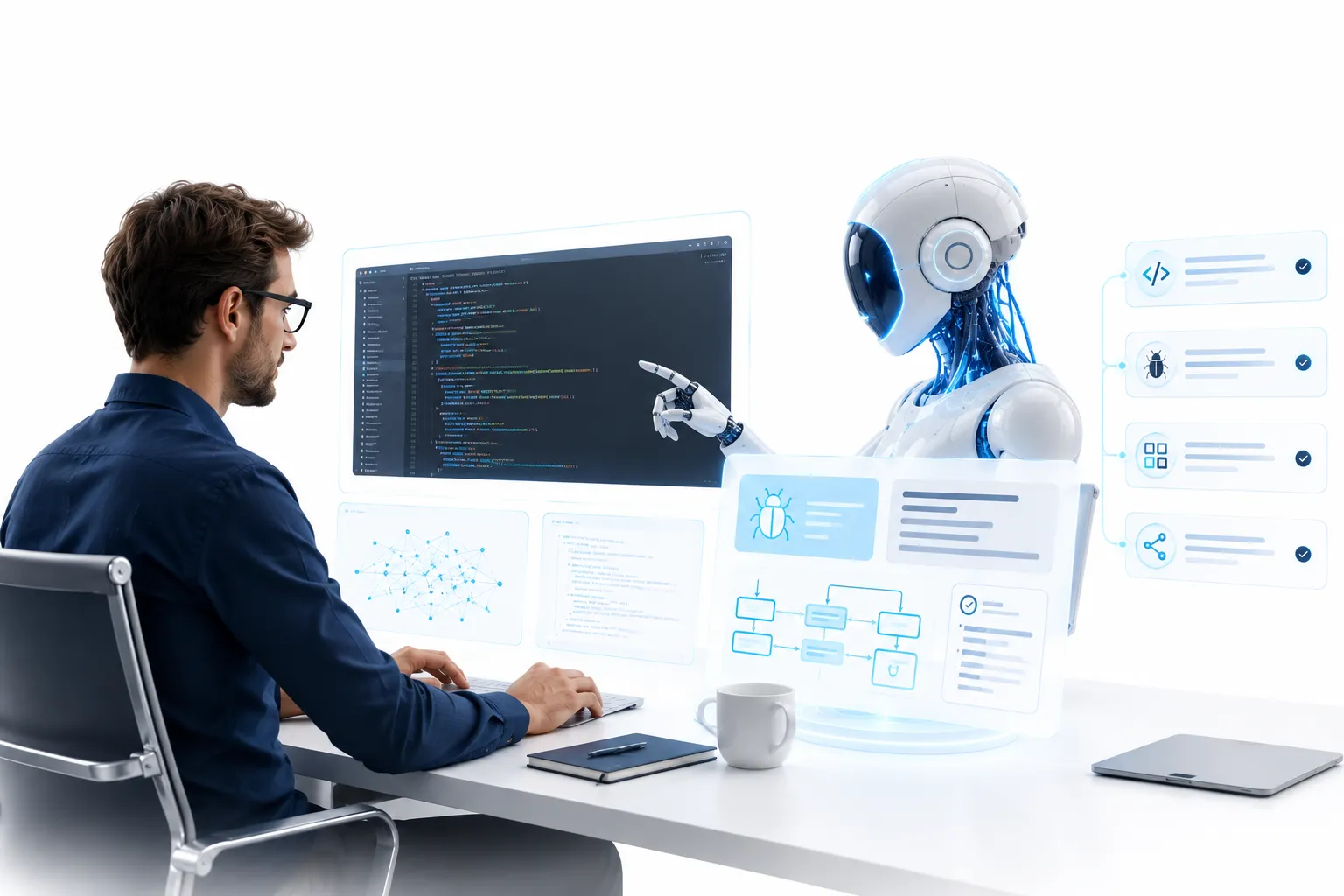
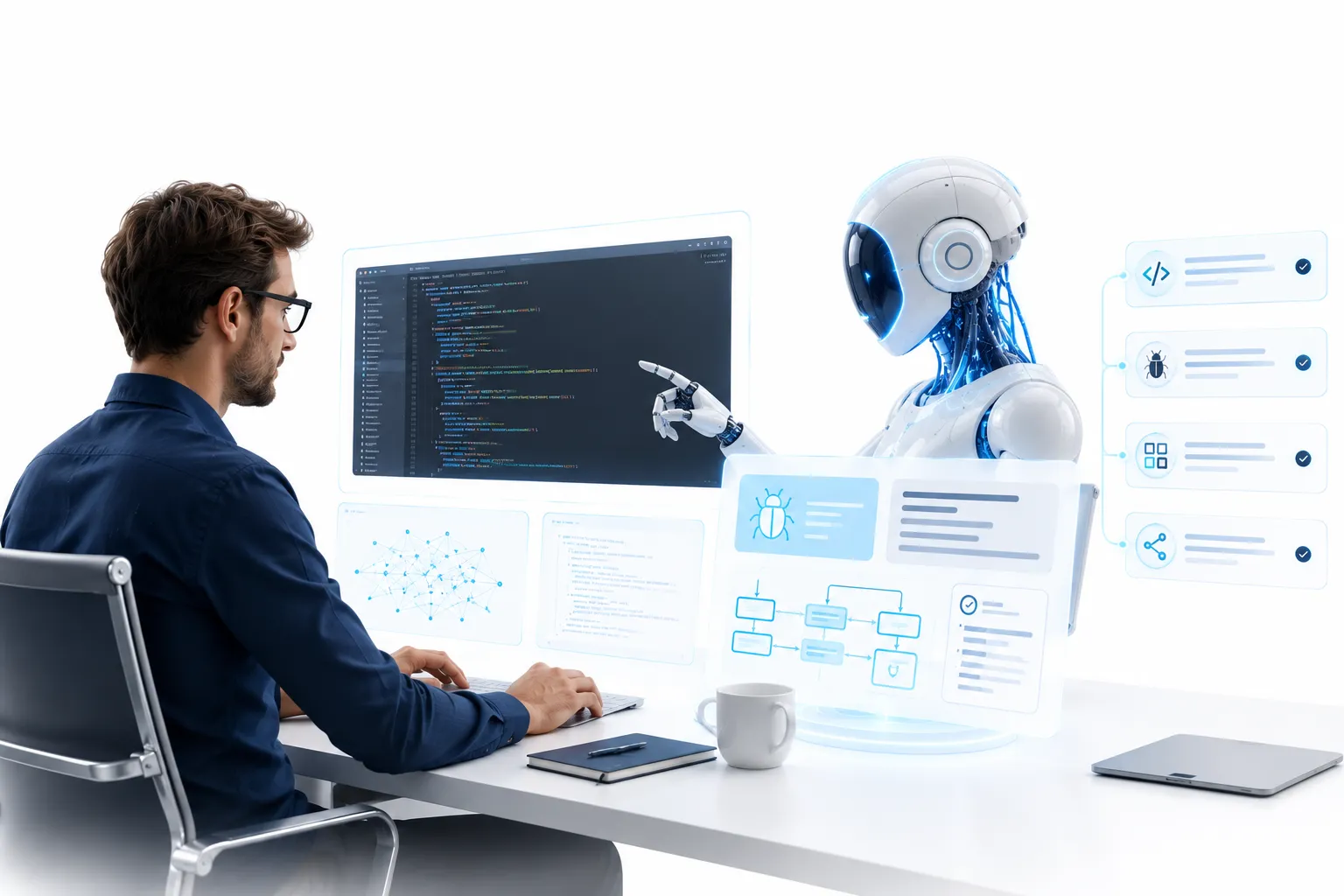
CODE GENERATION: AI writes functions, classes, and even entire modules from requirements. Handles 80% of boilerplate automatically.
TEST GENERATION: AI writes unit tests, integration tests, and property-based tests. Often catches edge cases humans miss.
BUG DETECTION: AI identifies common bugs, security vulnerabilities, and style violations. Static analysis on steroids.
SIMPLE DEBUGGING: AI traces errors, explains stack traces, and suggests fixes for common issues.
DOCUMENTATION: AI generates comments, READMEs, and API documentation automatically.
CODE REVIEW: AI flags potential issues, suggests improvements, and enforces style guidelines.
Human Advantage
What AI Cannot Do in Software Engineering
The uniquely human aspects of engineering remain AI-proof.
SYSTEM DESIGN: AI cannot design how components interact across a large system. Cannot make trade-offs between coupling, cohesion, latency, and cost.
ARCHITECTURE: AI cannot choose between microservices, monoliths, or serverless based on team size, organizational structure, and future needs.
REQUIREMENTS GATHERING: AI cannot extract implicit requirements from stakeholders, read between the lines, or negotiate scope.
COMPLEX DEBUGGING: When the bug makes no sense, when the logs show nothing, when it works locally but fails in production—AI fails. Human intuition wins.
TECHNICAL TRADE-OFFS: Choosing between speed, cost, maintainability, and time-to-market requires business judgment—AI cannot do this.
COLLABORATION: Working with product managers, designers, QA, and other teams requires human communication and empathy.
MENTORING: Teaching juniors, reviewing their work, and helping them grow is uniquely human.
High confidence
What Engineering Leaders Say
AI will not replace software engineers. However, the role is transforming. Pure 'coders' (implementation-only) are at high risk. Engineers who understand systems, architecture, and business context are safe and in growing demand. AI tools are now essential—learn them.
- Speed of transformation (3 years vs 7 years)
- Whether engineering employment grows or shrinks
- Impact on engineering salaries
Analogy
The Architect and the Bricklayer
Bricklayers are at risk. Architects are safe—and more valuable than ever. Software engineering is the same. 'Coders' lay bricks. 'Engineers' design buildings. AI can lay bricks. It cannot design buildings. Be an architect, not a bricklayer. Design systems. Don't just write code.
Survival Guide
How to Thrive as a Software Engineer in the AI Era
MASTER THE 80%: Focus on system design, architecture, requirements, collaboration, mentoring—skills AI lacks. LEARN AI TOOLS: Use Copilot, Cursor, ChatGPT for coding. Become 2-3x more productive. MOVE UP THE STACK: From implementation to design to architecture. The higher you go, the safer you are. DEVELOP DOMAIN EXPERTISE: Deep knowledge of a business domain (healthcare, finance, logistics) + engineering = AI-proof. DON'T BE A PURE CODER: Pure implementation roles are dying. Become a true engineer.
The worst response is ignoring AI. Every engineer will use AI in 3-5 years. Start now.FAQ
Common Questions
What's the difference between a programmer and a software engineer?
Programming is writing code. Engineering is designing systems, making trade-offs, understanding requirements, and collaborating. AI can program. It cannot engineer.
Will AI replace senior software engineers?
No. Senior engineers spend most time on design, architecture, mentoring, and collaboration—AI cannot replace these.
Should I still become a software engineer in 2025?
Yes—but focus on engineering, not just coding. Learn system design, architecture, and business context. Learn AI tools from day one.
What skills should software engineers develop to stay relevant?
System design, architecture, requirements gathering, technical communication, mentoring, complex debugging, AI tool proficiency.
Sources
References
Question journey
If this question matters, read these next
If you are worried about AI replacing jobs, most readers continue through this path.