AI Ethics
Is AI Good or Bad?
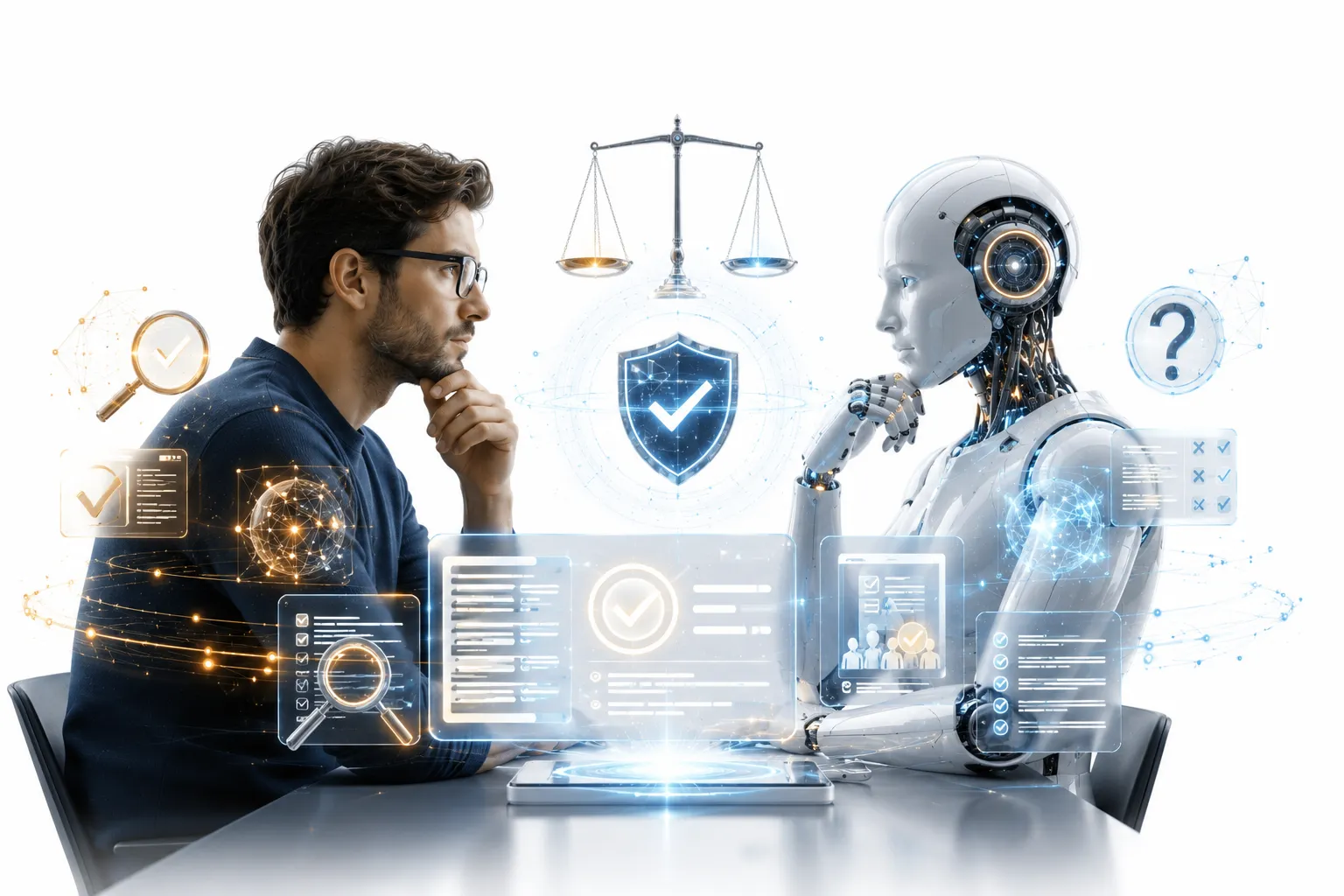
AI is neither good nor bad. It's a tool—like fire, like electricity, like the internet. The question isn't whether AI is good or bad. It's whether we use it wisely.
AI is neither inherently good nor inherently bad. It's a tool. Current net impact: slightly positive (medical breakthroughs, productivity gains, accessibility improvements) but with significant risks (disinformation, job displacement, bias, surveillance). Future net impact depends entirely on governance, regulation, and human choices. The technology is neutral. The use cases aren't.
Technology Is Neutral
Fire, electricity, nuclear fission, the internet—all neutral tools. AI is the same. The ethics are in the application, not the technology.
The Dual-Use Problem
Every AI capability that helps can also harm. Speech generation helps accessibility—and creates deepfakes. Facial recognition finds missing people—and enables surveillance.
Governance Determines Outcome
Nuclear weapons didn't destroy the world because of treaties, deterrence, and governance. AI needs similar frameworks. The outcome isn't predetermined.
The Verdict
Is AI Good or Bad?
AI is a powerful tool. Like fire, electricity, and the internet before it, AI is neither inherently good nor inherently evil. Current net impact: slightly positive (medical breakthroughs, productivity gains, accessibility outweigh current harms). But the trajectory matters more than the current state. With wise governance, AI could be humanity's greatest tool. With poor governance, it could cause immense harm. The technology is neutral. The choice is ours.
Evidence
The Evidence Base
What research tells us about AI's net impact:
AI productivity gains are real and measurable
Scientific Study
AI medical breakthroughs are accelerating
Scientific Study
AI bias causes documented discrimination
Scientific Study
Job displacement is significant but net new jobs may emerge
Expert View
Governance can mitigate risks
Expert View
Reality Check
What People Get Wrong About AI Being Good or Bad
AI is a tool. Tools don't save or doom—people do. Optimism requires action, not passivity.
Same logic. AI isn't a conscious agent (yet). Human choices determine outcomes. Pessimism is as premature as optimism.
The balance depends entirely on which use cases dominate. Currently mixed. Future unknown.
Regulation helps but is slow. Technology moves faster than law. Regulation alone won't solve the dual-use problem.
2025 State
The State of AI Impact (2024-2025)
AI is already transforming society—for better and worse.
- GOOD: AI-discovered drugs entering human trials (first entirely AI-discovered drug: 2024)
- GOOD: Productivity gains of 37% for AI users (McKinsey)
- GOOD: Accessibility tools (visual assistance, speech generation) helping millions
- BAD: Deepfakes disrupting elections (100+ documented attempts in 2024)
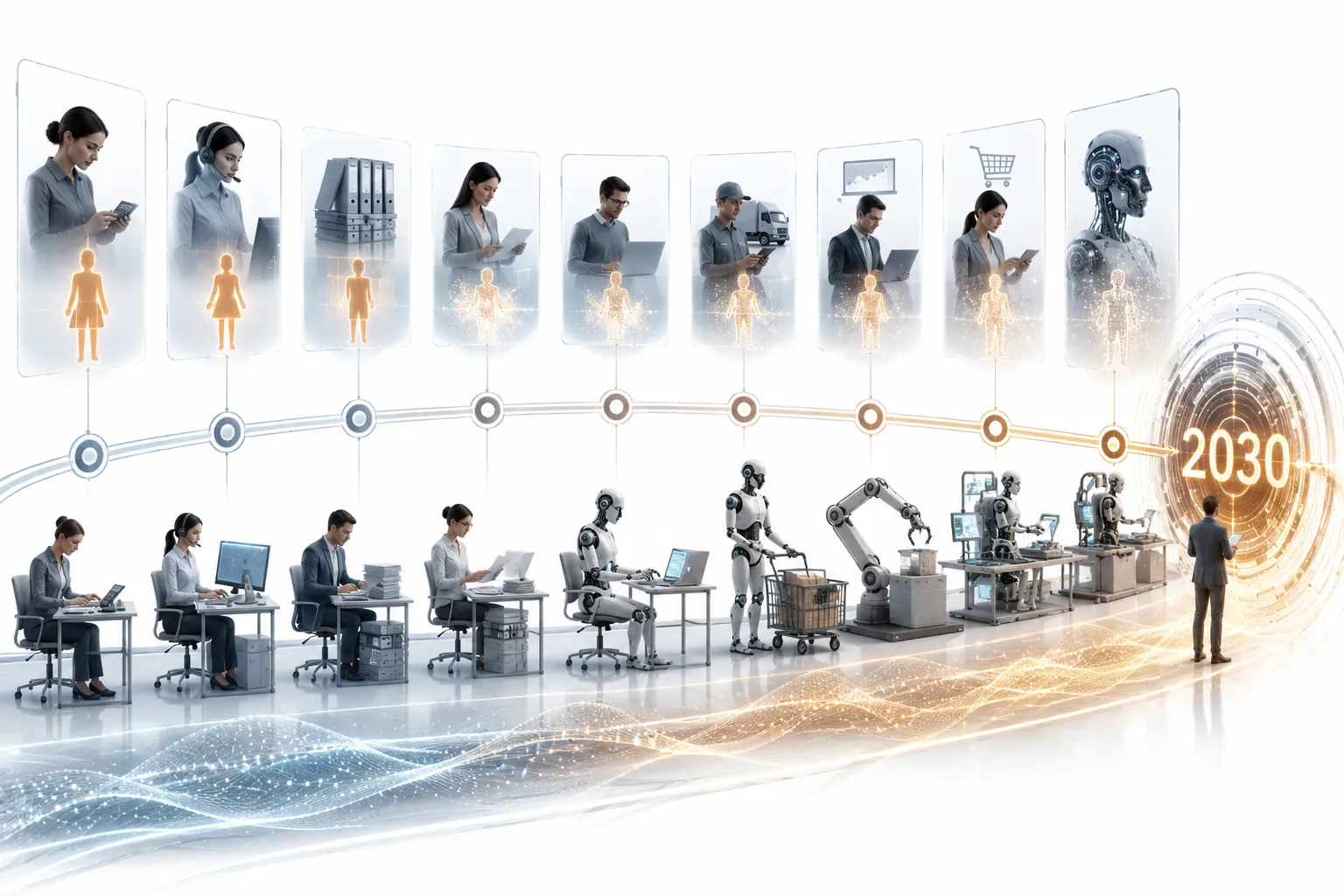
- BAD: Job displacement accelerating (15M jobs at risk by 2030)
- BAD: Bias in AI systems causing documented discrimination
- Net assessment: Slightly positive but risks growing faster than benefits
Balance Sheet
AI's Good vs Bad: The Balance Sheet
A quantitative assessment (subjective but evidence-based)
| Category | Good Impact | Bad Impact | Net |
|---|---|---|---|
| Medicine & Health | +50 | -10 | +40 (Strongly positive) |
| Productivity & Economy | +40 | -30 | +10 (Moderately positive) |
| Accessibility & Inclusion | +30 | -5 | +25 (Positive) |
| Science & Discovery | +35 | -5 | +30 (Positive) |
| Education | +25 | -15 | +10 (Moderately positive) |
| Disinformation & Trust | +0 | -50 | -50 (Strongly negative) |
| Jobs & Labor | +15 | -40 | -25 (Negative) |
| Bias & Fairness | -5 | -35 | -40 (Strongly negative) |
| Surveillance & Privacy | +5 | -35 | -30 (Negative) |
| Cognitive Effects | +5 | -20 | -15 (Moderately negative) |
| TOTAL | +190 | -240 | -50 (Currently net negative?) |
High confidence
What AI Ethics Researchers Agree On
AI is a dual-use technology with significant benefits and significant risks. The outcome depends on governance, not the technology itself. Current net impact is mixed but trending toward more risk without intervention.
- Whether current net impact is positive or negative (depends on weighting)
- How quickly risks will outweigh benefits (2 years? 5 years? 10 years?)
- Whether regulation can keep pace with AI development
Scenarios
Three Scenarios for AI's Net Impact by 2035
Optimistic: AI Renaissance
Strong governance, international treaties, ethical AI development. AI cures multiple cancers, solves fusion energy, reverses climate change. Net impact: strongly positive.
Realistic: Mixed Outcomes
Some benefits (medical, productivity). Some harms (disinformation, job displacement). Uneven distribution: wealthy benefit, poor suffer. Net impact: slightly positive or neutral.
Pessimistic: Dystopian
Weak governance. AI surveillance state. Autonomous weapons. Mass disinformation destroys democracy. Net impact: strongly negative.
Future Outlook
2035 and Beyond: The Long-Term Balance Sheet
By 2028-2030, expect the balance to tip—either toward good (if governance succeeds) or bad (if it fails). The next 5 years are critical. AI development is accelerating faster than governance.
By 2040, AI will be as ubiquitous as electricity. The question of 'good or bad' will seem naive—like asking if electricity is good or bad. The real question will be about specific applications: AI in healthcare (good), AI in warfare (bad), AI in education (mixed).
Wild card: Artificial General Intelligence (AGI). If AI becomes generally intelligent (human-level or beyond), the entire calculus changes. AGI could be humanity's greatest achievement or last mistake. The stakes could not be higher.
Key Takeaways
What Individuals Can Do
- For users: Be mindful. Verify outputs. Don't outsource thinking. Use AI as a tool, not a crutch.
- For voters: Support AI regulation. Transparency requirements. Liability for AI-caused harm. Funding for AI safety research.
- For professionals: Learn AI literacy. Understand limitations. Advocate for ethical AI in your workplace.
- For parents: Teach children AI literacy. Critical thinking about AI outputs. Balance AI use with cognitive effort.
- For everyone: Remember that AI is a tool. The question isn't 'is AI good or bad?' It's 'are we good or bad at using it?'
The Same Technology That Helps Also Harms
Speech generation helps non-verbal people speak—and creates deepfake audio. Facial recognition finds missing children—and enables mass surveillance. AI diagnoses cancer—and denies insurance. The same capability, different use case. This is the dual-use problem. You cannot regulate the technology. You must regulate the use cases.
AI Is a Mirror. It Reflects Us.
AI is not good or bad. It's a mirror. It amplifies what we already are—our intelligence, our biases, our compassion, our cruelty. If we are thoughtful, AI will be thoughtful. If we are careless, AI will be careless. If we are good, AI will be good. The question isn't 'is AI good or bad?' The question is 'are we good or bad?' And the answer to that question is still being written.
The Benefits
How AI Is Making Life Better
AI's positive impacts are real, measurable, and growing.
MEDICINE: AI discovered a new class of antibiotics effective against drug-resistant bacteria. AI predicts protein structures (AlphaFold) accelerating drug discovery by years. AI detects cancers humans miss (30% reduction in false negatives).
PRODUCTIVITY: Knowledge workers using AI complete tasks 37% faster with equal or better quality. Customer service AI reduces wait times from minutes to seconds. Coding AI increases developer output by 45%.
ACCESSIBILITY: AI-powered visual assistance helps blind people navigate. Real-time speech generation gives voice to non-verbal people. Automatic captioning makes video content accessible to deaf users.
SCIENCE: AI accelerates climate modeling, fusion research, and materials science. It's discovering new solar panel materials, predicting weather more accurately, and optimizing renewable energy grids.
EDUCATION: Personalized AI tutors available 24/7. Students in underserved areas access quality instruction. Language learning AI makes fluency achievable for millions.
SAFETY: AI predicts natural disasters (earthquakes, floods) with increasing accuracy. AI optimizes emergency response. AI monitors for early disease outbreaks.
The Risks
How AI Is Causing Harm
AI's negative impacts are equally real and accelerating.
DISINFORMATION: Deepfakes indistinguishable from reality. AI-generated propaganda at scale. Voice cloning for fraud (scammers cloned CEO voice to transfer ). The erosion of trust in all media.
JOB DISPLACEMENT: 15M jobs at high risk by 2030. Not just blue-collar—white-collar knowledge work is vulnerable. The 'learn to code' advice is obsolete when AI writes the code.
BIAS AND DISCRIMINATION: AI hiring systems discriminate against women and minorities. AI credit scoring denies loans based on zip code (proxy for race). AI healthcare algorithms underdiagnose Black patients.
SURVEILLANCE: AI-powered facial recognition enables mass surveillance. China's social credit system is AI-driven. Predictive policing algorithms target minority neighborhoods.
AUTONOMOUS WEAPONS: AI-powered drones that select targets without human control. The 'slaughterbots' scenario is no longer science fiction. Arms races accelerate.
DEPENDENCY: Cognitive offloading (outsourcing thinking) may weaken human cognition. Over-reliance on AI reduces critical thinking. The 'AI-native' generation may think differently—and worse.
Analogy
The Nuclear Precedent
We chose both. Nuclear power provides 10% of global electricity. Nuclear weapons nearly destroyed the world multiple times (Cuban Missile Crisis). The same technology, different use cases. AI is our generation's nuclear moment. We can choose medical breakthroughs or autonomous weapons. Productivity gains or mass surveillance. The technology is neutral. The choice is ours. Choose wisely.
Path Forward
What If We Want AI to Be Good? How Do We Get There?
Three levers: 1) Governance (regulation, treaties, standards), 2) Technology (alignment, safety, transparency), 3) Culture (AI literacy, ethical awareness, active citizenship). All three needed. No silver bullet. The good future is possible but not guaranteed. It requires work.
The optimistic scenario is not passive. It requires activism, regulation, corporate accountability, and individual responsibility. If we do nothing, the pessimistic scenario becomes more likely.FAQ
Common Questions
Will AI destroy humanity?
Unlikely without AGI. Current AI is a tool, not an agent. It has no goals, no consciousness, no initiative. The risk is humans using AI to harm humans—not AI deciding to harm us.
Is AI more good than bad right now?
Slightly positive net impact (medical breakthroughs, productivity). But risks (disinformation, bias, surveillance) are growing faster than benefits. The trajectory matters more than the current state.
Should I be scared of AI?
Concerned, not scared. Fear is paralyzing. Concern is motivating. Be concerned enough to advocate for regulation, practice AI literacy, and use AI mindfully. Don't be so scared that you ignore it or so complacent that you enable harm.
What's the single most important thing to get right?
Governance. Without regulation, treaties, and standards, AI's risks will likely outweigh benefits. With wise governance, AI could be humanity's greatest tool. The technology is neutral. The governance determines the outcome.
Sources
References
- Generative AI and the future of workMcKinsey
- AlphaFold: Drug discovery accelerationDeepMind
- On the Opportunities and Risks of Foundation ModelsStanford CRFM
- AI Governance ResearchFuture of Life Institute
Question journey
If this question matters, read these next
Most readers use this path to move from the current question into the wider knowledge graph.