Design Careers
Will AI Replace Designers?
AI can generate a logo in seconds. It can create hundreds of variations. But can it understand a brand's soul? Can it connect with human emotion?
Partially. AI will replace routine, formulaic design work like logo generation, social media graphics, and basic layout. These face 30 to 50 percent role reduction by 2030. However, AI will not replace strategic design including UX design, brand strategy, creative direction, and human centered design. The designer role transforms. Production designers are at risk. Strategic designers are safe and growing in value.
Production Design Is at Risk
Logo generation, social media graphics, and template based design are highly automatable. These face 30 to 50 percent reduction.
Strategic Design Is Safe
UX design, brand strategy, creative direction, and human centered design require human judgment. These are AI proof.
AI Is a Tool, Not a Designer
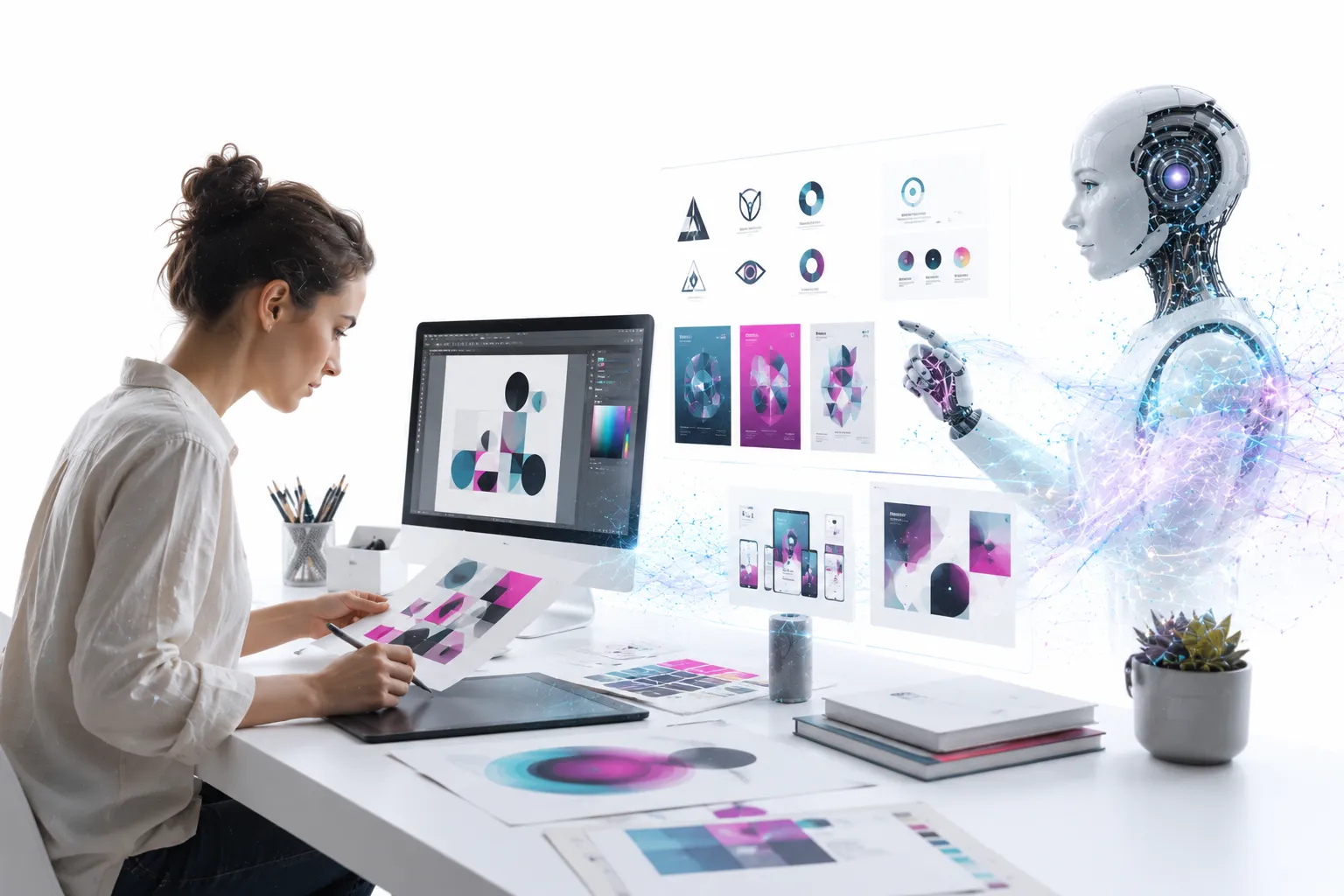
AI generates options. Humans choose, refine, and provide strategy. The best work comes from human AI collaboration.
The Verdict
Will AI Replace Designers?
AI will replace routine, formulaic design work including logo generation, social media graphics, and template based layouts. These face 30 to 50 percent role reduction by 2030. However, AI will not replace strategic design including UX design, brand strategy, creative direction, and human centered design. The designer role transforms. Production designers are at risk. Strategic designers who focus on user understanding, brand psychology, and creative direction are safe and growing in value.
2025 State
AI in Design Today (2025)
AI design tools are widely adopted, mostly for production work.
- Over 50 percent of designers use AI tools (Midjourney, DALL-E, Canva AI)
- Logo design market disrupted by AI generators (Looka, Brandmark)
- Social media graphics automated by Canva AI and others
- UX designer demand up 20 percent (strategic work growing)
- Production designer hiring down 15 to 25 percent
- Designer productivity up 40 percent with AI assistance
Evidence
What Research Shows
Studies on AI in design:
AI logo generators disrupt low end market
Industry Data
Designer productivity up 40% with AI
Industry Data
UX designer demand growing
Industry Data
Strategic design is AI proof
Expert View
AI cannot replace creative direction
Expert View
Comparison
Design Specializations by AI Impact
Risk and transformation by specialization
| Specialization | AI Risk | 2030 Outlook | Action Needed |
|---|---|---|---|
| Logo design (low end) | High (70-80%) | -50-70% | Move upmarket |
| Social media graphics | High (60-70%) | -40-60% | Focus on strategy |
| Production design | High (50-60%) | -30-50% | Upskill to UX |
| Graphic design | Medium (30-50%) | -20-40% | Specialize |
| Illustration | Medium (30-40%) | -10-30% | Develop unique style |
| UX design | Low (10-20%) | +15-25% | Thriving, advance |
| Brand strategy | Very Low (<10%) | +20-30% | Thriving |
| Creative direction | Very Low (<10%) | +15-25% | Thriving |
Reality Check
What Designers Get Wrong About AI
False. AI replaces production design. Strategic design is safe and growing.
No. AI generates options, but human taste and judgment are essential for quality.
Designers who ignore AI will be replaced by designers who use AI. Adapt or fall behind.
No. AI has no taste. It follows patterns. Taste requires human judgment.
Scenarios
Three Design Employment Scenarios for 2030
Optimistic: Augmented Design
AI handles production. Designers focus on strategy, UX, and creative direction. Productivity soars. Design becomes more valuable.
Realistic: Polarization
Production design shrinks 30 to 50 percent. Strategic design grows 20 to 30 percent. Total employment flat. Wage gap widens.
Pessimistic: Production Extinction
AI automates 70 to 80 percent of production design. Only strategic designers survive. Major disruption for junior designers.
Future Outlook
Design in 2035
By 2028 to 2030, expect AI to handle 50 to 70 percent of production design. Junior production roles will shrink. Strategic designers will thrive.
By 2035, design will bifurcate. Cheap AI design for routine needs. Premium human strategic design for brands that care. The best designers will be AI augmented strategists.
A wild card: What if AI develops true taste? If AI can make aesthetic judgments as well as top designers, even strategic roles are threatened. Most experts say 15 plus years away, if possible at all.
Key Takeaways
What Every Designer Should Know
- AI will replace production design: logos, social graphics, templates.
- Strategic design is safe: UX, brand strategy, creative direction.
- Learn AI tools. AI augmented designers will outperform those who ignore AI.
- Focus on human skills: empathy, user research, client relationships.
- Specialize. General graphic design is threatened. UX and strategy are growing.
- Taste and judgment are AI proof. AI generates. Humans choose.
The Logo Design Dilemma: AI Is Disrupting the Bottom
AI logo generators like Looka and Brandmark create logos for to . Human designers charge to . For many small businesses, AI is good enough. The low end of logo design is dying. However, high end brand identity for established companies still requires human strategists and designers. The market bifurcates. Low end is automated. High end becomes more valuable.
AI Generates. Designers Choose.
AI can generate a thousand logos. It cannot choose the right one. AI can create a hundred color palettes. It cannot feel which one is right. AI generates. Designers choose. That choice, that judgment, that taste is the value of human design. Use AI to generate options. But never delegate the decision. The choice is yours. That is design.
AI Capabilities
What AI Can Design Today
AI excels at generating options and handling routine production work.
LOGO DESIGN: AI generates hundreds of logo options based on prompts. Tools like Looka and Brandmark create professional logos in seconds.
SOCIAL MEDIA GRAPHICS: AI creates Instagram posts, Facebook covers, and Twitter headers. Canva AI generates templates automatically.
LAYOUT AND TEMPLATES: AI designs brochures, flyers, and presentations. It arranges elements based on design principles.
ILLUSTRATION: AI generates custom illustrations from text prompts. Midjourney and DALL-E create unique artwork.
COLOR PALETTES: AI suggests color schemes based on brand attributes and accessibility guidelines.
IMAGE EDITING: AI removes backgrounds, retouches photos, and applies filters automatically.
Human Advantage
What AI Cannot Design
Strategic, human centered design remains human.
USER EXPERIENCE (UX): AI cannot understand user needs, conduct user research, or synthesize findings into insights. UX requires empathy and human understanding.
BRAND STRATEGY: AI cannot define a brand's soul, purpose, or emotional positioning. Brand strategy requires deep understanding of human psychology and culture.
CREATIVE DIRECTION: AI cannot set a creative vision, guide a team, or make taste judgments. Creative direction requires human aesthetic sense.
HUMAN CENTERED DESIGN: AI cannot design for complex human needs, emotions, and behaviors. This requires empathy and lived experience.
DESIGN THINKING: AI cannot facilitate workshops, synthesize diverse perspectives, or navigate organizational politics. Design thinking is human.
CLIENT RELATIONSHIPS: AI cannot build trust, understand unspoken needs, or manage stakeholder expectations.
Different Specializations, Different Fates
How AI Affects Different Design Specializations
Your risk depends on your specialization.
LOGO DESIGN: High risk. AI generates logos instantly for low prices. Expect 40 to 60 percent reduction in low end logo work. High end brand identity remains human.
SOCIAL MEDIA DESIGN: High risk. AI automates template based social graphics. Expect 30 to 50 percent reduction.
PRODUCTION DESIGN: Medium to high risk. Layout, pre press, and production work is highly automatable. Expect 30 to 50 percent reduction.
GRAPHIC DESIGN: Medium risk. General graphic design faces 20 to 40 percent automation. Designers must specialize.
ILLUSTRATION: Medium risk. AI generates illustrations quickly. Expect 20 to 30 percent reduction. Unique, stylized work remains human.
UX DESIGN: Low risk. User research, testing, and strategy require human empathy. Demand growing 15 to 25 percent.
BRAND STRATEGY: Very low risk. Brand psychology and positioning require human judgment. Growing demand.
CREATIVE DIRECTION: Very low risk. Vision, taste, and leadership are AI proof. Growing demand.
High confidence
What Design Leaders Say
AI will automate production design but not strategic design. UX, brand strategy, and creative direction are AI proof. Designers must learn AI tools and focus on human centered skills.
- Severity of production design reduction
- Whether AI can develop taste
- Role of AI in UX research
Analogy
The Camera for Painting
AI is the camera for design. It automates production. It frees designers for strategy, UX, and creative direction. The best designers will use AI as a tool, not fear it as a replacement. Not extinction. Evolution.
Survival Guide
How to Survive as a Designer
MOVE TO STRATEGY: Shift from production to UX, brand strategy, or creative direction. These are AI proof. LEARN AI TOOLS: Master Midjourney, DALL-E, Canva AI, and Figma AI. Use them to generate options faster. FOCUS ON HUMAN SKILLS: Develop empathy, user research, facilitation, and client relationships. These are irreplaceable. SPECIALIZE: General graphic design is threatened. Specialize in UX, brand strategy, or creative direction. DEVELOP TASTE: AI has no taste. Your aesthetic judgment is your value. Never delegate final decisions to AI.
The worst response is ignoring AI. Every designer will use AI in 5 years. Start now.FAQ
Common Questions
Will AI replace graphic designers?
Partially. Production design is at risk. Strategic design like UX and brand strategy is safe.
Can AI do UX design?
Not well. UX requires user research, empathy, and human understanding. AI can assist but not replace.
Should I become a UX designer in 2025?
Yes. UX design is AI proof and growing. Demand is up 20 percent and rising.
Is logo design dead?
The low end is dying to AI. High end brand identity for established companies remains human. Move upmarket.
Sources
References
- AIGA AI in Design SurveyAIGA
- UX Design Institute Job ReportUX Design Institute

Question journey
If this question matters, read these next
If you are worried about AI replacing jobs, most readers continue through this path.